

HoneyFil Gummies Label Guide: What the Supplement Facts Panel, Serving Directions, and Safety Statements Disclose for 2026
HoneyFil Gummies label guide for 2026, covering the Supplement Facts panel, serving directions, ingredients, safety statements, and key label details.
Aurora, CO, Aug. 12, 2026 (GLOBE NEWSWIRE) -- Dietary supplement labels are designed to give consumers information about a product’s ingredients, serving size, directions for use, and relevant safety statements. For HoneyFil, publicly available product information describes the product as a dietary supplement containing a combination of vitamins, amino acids, and botanical extracts. The available information also identifies the product as a male wellness supplement and provides directions concerning daily use.
Official Website: https://honey-fil.store/
Because supplement formulations and packaging can change, the physical package in a consumer’s possession is the most appropriate reference for current label information. Online descriptions should not automatically be treated as a substitute for the Supplement Facts panel or other statements printed on the product container.
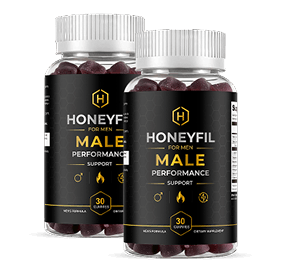
This distinction is particularly relevant for HoneyFil because publicly available pages do not present completely consistent descriptions of the product format. One HoneyFil page describes the product as a gummy, while another section refers to it as a capsule. Consumers therefore have reason to check the packaging they receive for the exact serving size, formulation, and directions applicable to that product.
What the Ingredient Information Shows
The HoneyFil product information currently available online identifies several ingredients associated with the formula. These include vitamin B3 (niacin), zinc in the form of zinc oxide, L-citrulline, L-carnitine, pine bark extract, maca root extract, grape skin extract, and saffron stigmas extract.
These ingredients fall into several different categories. Niacin and zinc are nutrients, while L-citrulline and L-carnitine are compounds commonly used in dietary supplements. The remaining ingredients are botanical extracts derived from plants.
Listing an ingredient on a Supplement Facts panel does not, by itself, establish that the finished product produces a particular health outcome. The amount, form, extraction method, serving size, and overall formulation can all affect how an ingredient should be interpreted. For that reason, a label-focused assessment should distinguish between what the packaging states and conclusions that would require independent scientific evidence.
The publicly available HoneyFil information also describes the formula in terms of circulation, energy, vitality, and male well-being. These are product-positioning statements rather than evidence that the supplement diagnoses, treats, or prevents a medical condition.
Why the Supplement Facts Panel Matters
The Supplement Facts panel is one of the most important parts of a dietary supplement package because it presents information about the serving size and the amount of listed dietary ingredients supplied per serving.
For consumers examining HoneyFil, the first details to check are the serving size, servings per container, ingredient names, quantities, and any applicable Daily Values. These details provide the basic framework for understanding what is being consumed.
The available HoneyFil web information lists the ingredients but does not provide a complete quantitative breakdown for every ingredient in the same manner that a full Supplement Facts panel would. Consequently, it would be inappropriate to assign specific quantities to individual ingredients unless those quantities are confirmed by the current physical label or another authoritative product document.
This is an important distinction in supplement reporting. Knowing that an ingredient appears in a formula does not reveal how much of that ingredient is present. Without the amount per serving, comparisons with studies involving particular doses may be misleading.
Consumers reviewing the package should therefore record the exact serving size and ingredient quantities shown on the current label rather than relying on figures reproduced elsewhere online.
Serving Directions and Daily Use
The HoneyFil information currently available online provides a daily-use direction. One product page states that users should take one capsule daily with water, preferably at the same time each day, and should not exceed the recommended dosage.
Because the same source also describes HoneyFil elsewhere as a gummy, the exact directions should be confirmed against the package accompanying the product. If the physical label identifies a different serving size or administration method, the printed label should take precedence.
Following the labeled serving is an important part of responsible supplement use. Taking more than the recommended amount does not necessarily provide additional benefit and can increase exposure to individual ingredients.
The label should also be read alongside any storage instructions. The HoneyFil information says the product should be stored in a cool, dry place and indicates a stated shelf-life period for product quality. Consumers should use the storage conditions and expiration or quality date printed on their own package rather than relying exclusively on information found on an older webpage.
Safety Statements and Consumer Precautions
Safety language is another significant component of supplement labeling. The publicly available HoneyFil information advises people with a medical condition or those taking prescription medication to consult a healthcare professional before using the product.
The same information includes a standard dietary supplement disclaimer stating that the product has not been evaluated by the U.S. Food and Drug Administration for diagnosing, treating, curing, or preventing disease.
Such language is important because dietary supplements occupy a different regulatory category from prescription medicines. A product's presence on the market should not be interpreted as FDA approval of its effectiveness for a particular medical condition.
Consumers should also consider whether the ingredients in a supplement are appropriate for their individual circumstances. People taking medications, managing a medical condition, preparing for a medical procedure, or considering supplementation during pregnancy or breastfeeding may have additional reasons to seek professional advice.
A safety statement should therefore be read as part of the product information rather than as a formality that can be ignored.
Interpreting Claims About Energy and Male Wellness
HoneyFil's publicly available materials describe the product in connection with energy, circulation, physical vitality, and male well-being. Those descriptions communicate how the manufacturer positions the product, but they should not be confused with independently established medical outcomes.
A neutral reading of a supplement label separates three different types of information.
First, there are label facts, such as the names of ingredients, serving directions, storage information, and warnings.
Second, there are manufacturer statements, which describe the intended role or positioning of the product.
Third, there are scientific conclusions, which require evidence from appropriately designed research.
Keeping these categories separate helps prevent a product description from becoming an unsupported health claim.
For example, the presence of an ingredient associated with a particular biological function does not establish that the finished supplement produces the same effect. Evidence concerning an isolated ingredient at a particular dose cannot automatically be transferred to a proprietary combination or a formulation whose individual quantities are not fully disclosed.
What Consumers Should Check on the Physical Package
Before using HoneyFil, consumers can review several basic label elements.
The first is the serving size. This establishes how the manufacturer defines one serving.
The second is the ingredient list and quantities. Ingredient names should be checked against the current package rather than copied from an unrelated online listing.
The third is the suggested use. Consumers should follow the manufacturer's stated directions and avoid exceeding the recommended serving unless instructed otherwise by a qualified healthcare professional.
The fourth is the warning language. Any statements concerning medications, medical conditions, pregnancy, breastfeeding, allergies, or adverse reactions should be considered before use.
The fifth is storage information and product dating. These details help consumers maintain product quality and determine whether a particular package is still within its stated usable period.
Finally, consumers should check the manufacturer or distributor information printed on the packaging. This can be useful when clarification is needed about a formulation, ingredient quantity, or updated label.
Why Online Information Should Be Compared With the Label
Online supplement pages can provide useful background information, but they may contain marketing language, outdated details, or inconsistencies. The publicly available HoneyFil material illustrates why checking the actual packaging matters: different portions of the available information describe the product differently, including references to both gummy and capsule formats.
For that reason, a responsible description of HoneyFil should avoid presenting an online ingredient list as a definitive transcription of the current Supplement Facts panel unless the current label has been independently verified.
This approach is also useful when products undergo formulation or packaging updates. A label dated or supplied for one production period may not necessarily represent a later version.
A Label-Based View of HoneyFil in 2026
The publicly available information provides a general picture of HoneyFil as a dietary supplement containing a mixture of nutrients, amino acids, and botanical extracts. It also provides daily-use instructions and standard safety and regulatory language.
However, a label-focused account should stop where the available evidence stops. The currently accessible product information does not provide enough verified detail to reproduce a complete quantitative Supplement Facts panel for every listed ingredient, and the online descriptions contain a discrepancy regarding the product's form.
Accordingly, the most reliable way to understand a particular HoneyFil product in 2026 is to examine the package itself, including its Supplement Facts panel, serving directions, ingredient quantities, warnings, storage instructions, and manufacturer information.
Website: https://honey-fil.store/
Conclusion
A dietary supplement label provides a factual starting point for understanding what a product contains and how the manufacturer instructs consumers to use it. For HoneyFil, available product information identifies a range of nutrients, amino acids, and botanical extracts, together with directions for daily use and standard safety language.
The key point is that ingredient presence should not be confused with proof of a particular health outcome. Similarly, manufacturer descriptions should be distinguished from independently established scientific evidence.
Because publicly available HoneyFil information contains differences in how the product is described, consumers should rely on the current physical package for the definitive serving format and Supplement Facts information. Reading the complete label—including quantities, directions, warnings, and storage instructions—provides a more reliable basis for understanding the product than relying on promotional descriptions alone.

HoneyFil
Phone Support: +1 844-685-6723
Email Support@HoneyFil.com
19655 E 35th Drive, Suite 100
Aurora, CO 80011 — USA
Legal Disclaimer:
EIN Presswire provides this news content "as is" without warranty of any kind. We do not accept any responsibility or liability for the accuracy, content, images, videos, licenses, completeness, legality, or reliability of the information contained in this article. If you have any complaints or copyright issues related to this article, kindly contact the author above.
